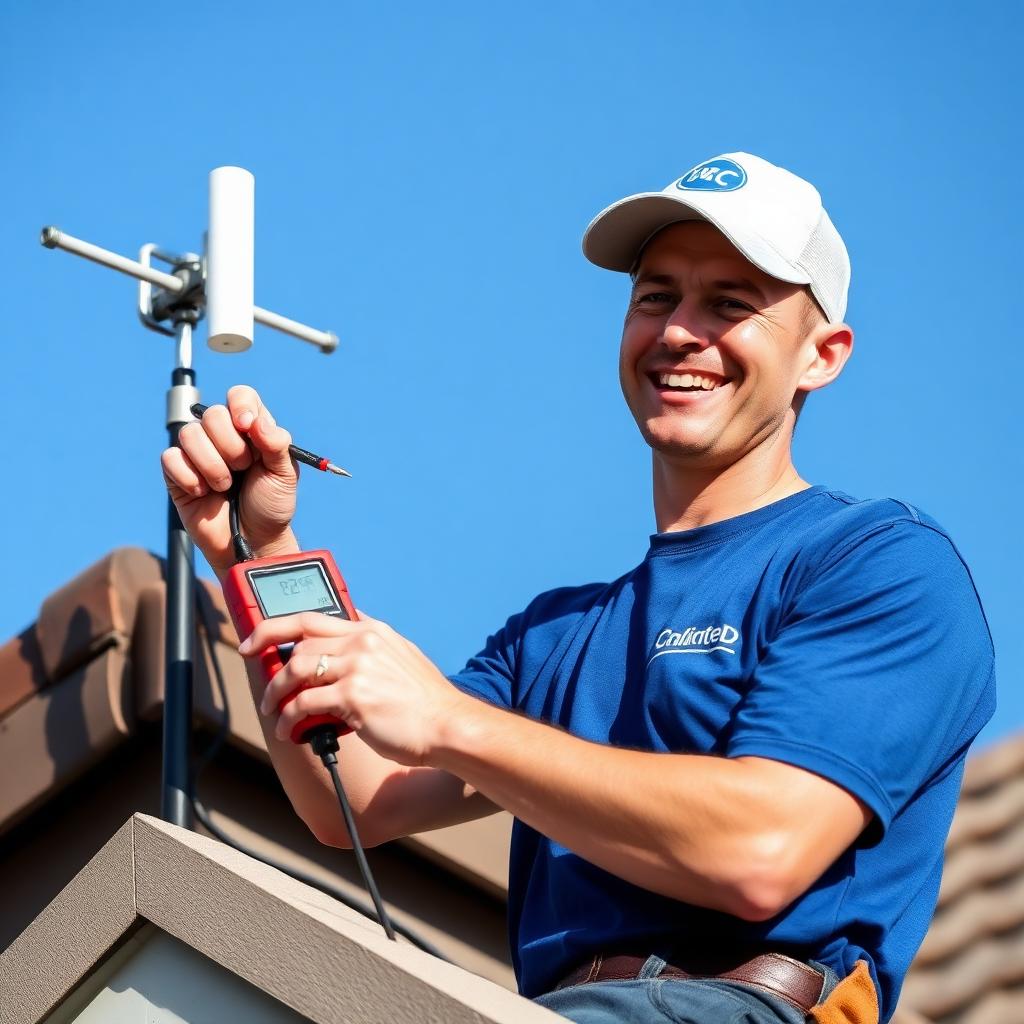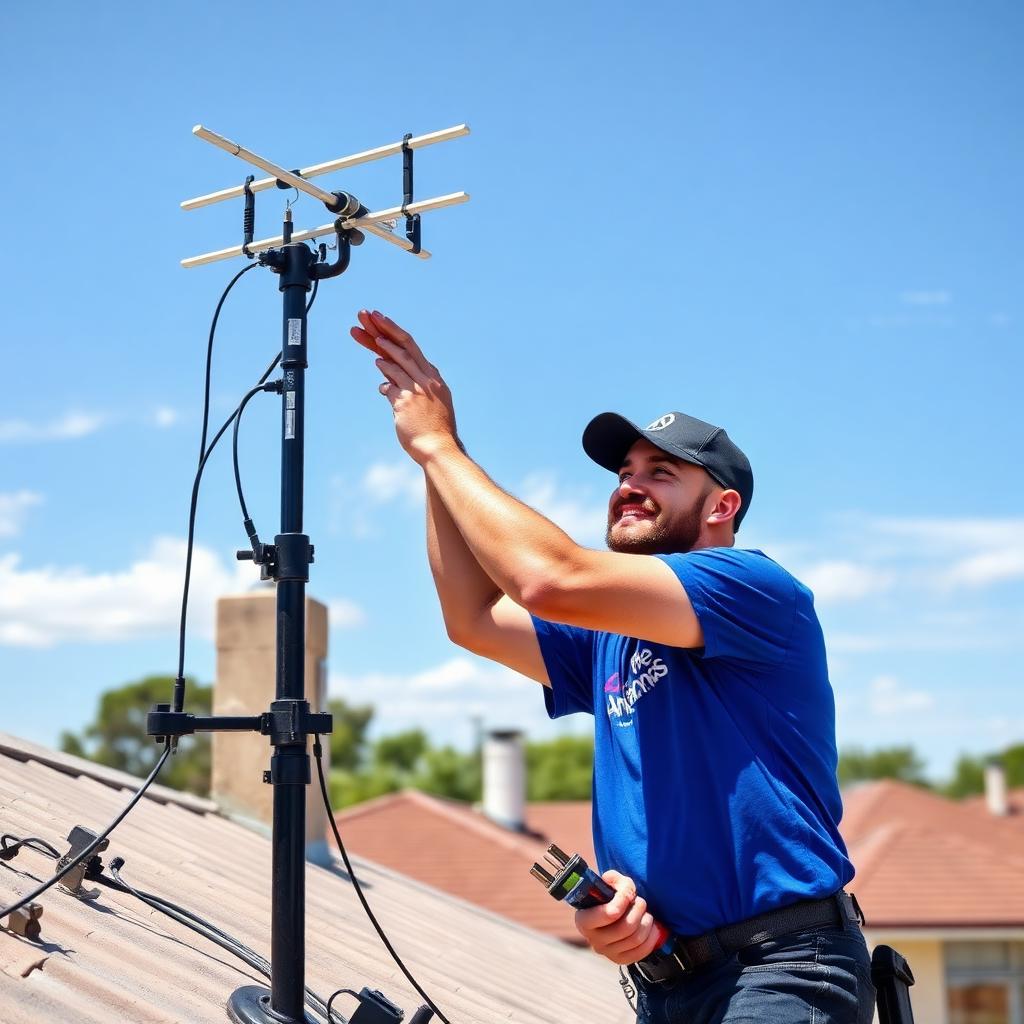
Most Melbourne homeowners only think about their TV antenna when something breaks. But understanding how digital Free-to-Air television actually reaches your living room makes it dramatically easier to diagnose reception problems, choose the right antenna, and know when a technician is telling you the truth. This guide breaks down Melbourne's digital TV signal path from the Mt Dandenong transmitter through the atmosphere, down your coaxial cable and into your TV tuner — in plain English, with no jargon.
Where Melbourne's Free-to-Air Signal Comes From
Almost every Free-to-Air channel in Melbourne — Seven, Nine, Ten, ABC, SBS and all their multichannels — is broadcast from a cluster of transmitters on top of Mt Dandenong, roughly 40 km east of the CBD. A smaller relay transmitter at South Yarra fills the CBD shadow, and additional translators cover Frankston, the Mornington Peninsula and the outer west. This means the vast majority of Melbourne antennas point east-south-east toward Mt Dandenong, which is why installers can usually spot a misaligned antenna from the street.
Digital broadcasts leave the transmitter as radio waves on specific UHF and VHF frequencies. Melbourne currently uses UHF band IV and V (channels 28–51) for most services, with a few VHF band III allocations. Your antenna's job is to capture those specific frequencies and reject everything else — which is why a generic "amplified indoor antenna" from a big-box store rarely performs well.
Why Reception Varies So Much Between Melbourne Suburbs
Signal strength drops sharply with distance and obstructions. Suburbs with clear line-of-sight to Mt Dandenong — Box Hill, Glen Waverley, Doncaster, Nunawading — enjoy signal levels 20–30 dB above the minimum needed for lock. Northern suburbs like Craigieburn and Mickleham sit 45+ km from the transmitter with intervening hills, so signal arrives 40 dB weaker. Bayside suburbs like St Kilda and Frankston deal with over-water reflections, and inner-city areas battle multipath interference bouncing off high-rises.
This is why a $99 antenna that works fine in Coburg is useless in Werribee. Antenna selection must match the local signal environment.
What Happens Inside Your Coaxial Cable
The signal your antenna captures travels down the coaxial cable at around two-thirds the speed of light — but it also loses strength with every metre. Quality RG6 quad-shield cable loses about 6 dB per 30 metres at UHF frequencies. Cheap RG59 or damaged cable can lose double that, which is why professional Melbourne installers refuse to reuse decades-old cabling on new installations.
The masthead amplifier — usually mounted right next to the antenna — boosts the signal before that cable loss occurs, which is why amplifying at the wall socket almost never works.
How Your TV Decodes the Signal
Your TV tuner locks onto the digital multiplex, extracts the MPEG-4 video stream (Australia switched from MPEG-2 in stages during 2024–2025) and displays the picture. If the signal-to-noise ratio drops below around 20 dB, you get pixelation. Below about 15 dB you get nothing at all — the famous "no signal" black screen. Digital is either perfect or broken; there's no fuzzy analogue middle ground.
Need a Melbourne antenna technician today?
Same-day service · No call-out fee · 12-month workmanship guarantee.